
- Rated 5.0 on Google
- 10 years’ experience
- 5-year workmanship guarantee
- Fully insured
- Free site visits
- No call-out charge
By Taylor Teasdale, Owner ·
For most driveways, the answer is no — and the reason is a rule that is simpler than people expect.
The five square metre rule
Since 2008, paving over a front garden has been permitted development, meaning no planning application is needed, as long as one of two things is true. Either the new surface is permeable, so rain soaks through where it lands. Or the water it sheds is directed onto a lawn, a border or a soakaway within your own property rather than running out onto the road.
You only need planning permission if you lay more than five square metres of a surface that water cannot pass through and that drains onto the highway. Five square metres is less than half a parking space, so in practice almost any full driveway crosses that threshold — which means the deciding factor is almost always drainage, not size.
The rule exists because of flooding. Sealed front gardens across a street send a large volume of water into a drainage system that was never sized for it, and that is how roads that never used to flood start to.
Staying on the right side of it
In most cases this is straightforward, and it is the default way we build anyway:
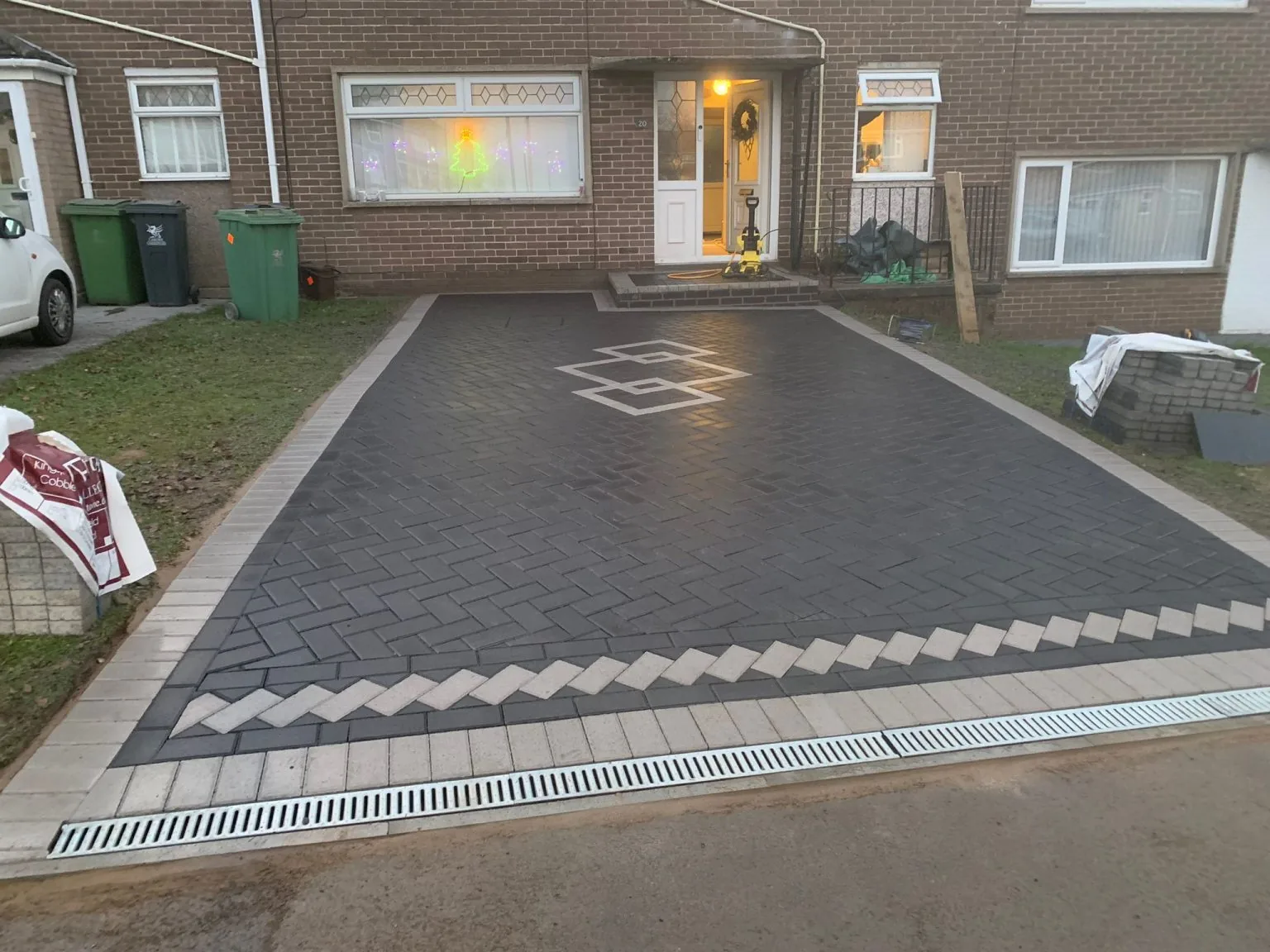
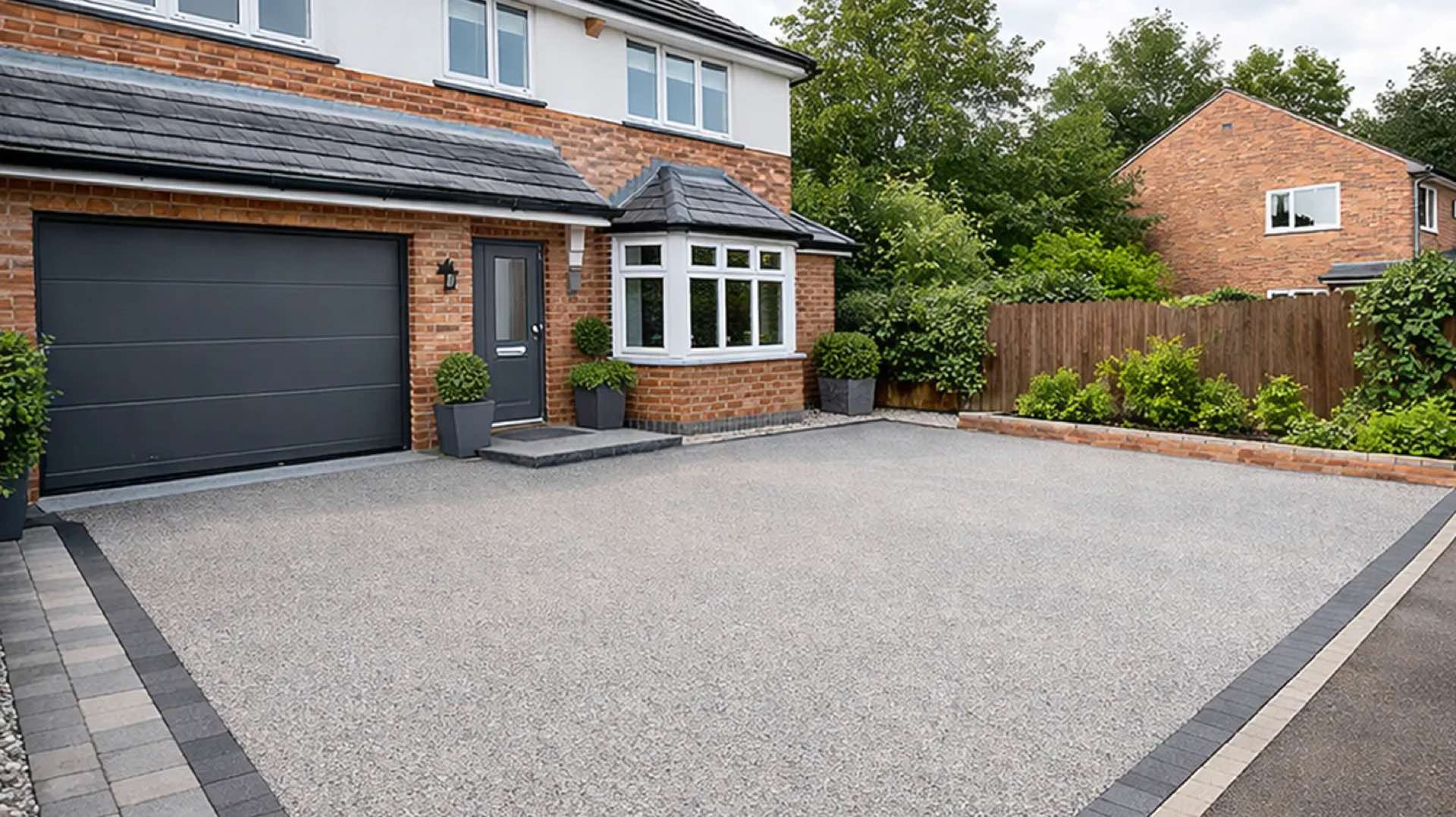
- Lay resin-bound, which is permeable by its nature
- Lay permeable block paving with open joints over a permeable sub-base
- Keep a conventional surface but fall it towards a border, a lawn or a soakaway on your own land
- Add a channel drain running to a soakaway rather than to the street
Any of those keeps the job as permitted development, and all of them are better for the house regardless of the rules. Water that leaves your driveway properly is water that is not finding a way into your garage.
When the answer changes
A new access onto a classified road. This is the big one, and it is the exception most people have never heard of. If the driveway needs a brand new opening onto an A, B or C road, that access needs planning permission whatever you surface it with — permitted development for a new access does not apply to classified roads. Plenty of roads around Penrith, Appleby and Kirkby Stephen are classified, and an unnumbered lane can still be a C road, so you cannot tell from the signs. If you are creating an opening where there is not one already, check with the council first. Widening or resurfacing an access that already exists is a different matter.
Flats and maisonettes. Permitted development rights for paving apply to houses. Flats do not have them, so an application is needed regardless of surface.
Listed buildings. Listed building consent is required for work affecting the character of the property, and that can extend to the driveway, the gateposts and any boundary walls.
Conservation areas. Permission is not automatic, but permitted development rights are often restricted by an Article 4 direction, and materials carry more weight. Worth a call to the council before committing.
National Parks. Planning sits with the Park Authority rather than the local council. The paving rules themselves are not automatically stricter, but an Article 4 direction can remove the permitted development right in a given area, and the Authority looks closely at frontages and surface water. Worth asking early if you are in the Lake District or the Yorkshire Dales.
New-build properties. Some come with planning conditions attached that restrict what can be done to the frontage, sometimes for years after completion. Check your deeds and your planning conditions.
The dropped kerb is a separate thing
This catches people out more than anything else on this page. Permission to build a driveway says nothing about permission to drive across the pavement to reach it. That is a highways matter, it is a separate application, and the council sets the specification the crossing must meet.
Apply for it before the driveway goes in. A beautifully built driveway you cannot legally access is not a good position to be in, and the application can take weeks.
The practical answer
Build it permeable, or make sure the water goes somewhere on your own land, and you almost certainly need no planning permission at all. Where there is any doubt — a listed building, a conservation area, a National Park, a flat — one phone call to the council settles it, and it is a far cheaper call than an enforcement notice.
We will tell you where you stand at the site visit, and in the great majority of cases we design the job so the question does not arise.
Not sure where you stand?
We will tell you at the free site visit whether what you want needs an application, and design it so that in most cases it does not.
Common questions
Planning questions
Anything that lets water through where it falls rather than shedding it to the road. Resin-bound is permeable. Permeable block paving, laid with open joints over a permeable sub-base, is permeable. Gravel is permeable. Standard concrete, tarmac and non-permeable block paving on a sealed base are not, although they can still be exempt if they drain to a lawn, a border or a soakaway on your own land rather than onto the highway.
It needs an application, but to the highways department rather than planning, and it is always separate from the driveway itself. The council sets the specification the crossing has to meet and often requires an approved contractor to do the work. Apply before the driveway is built, not after — a finished driveway with no legal way to cross the pavement is an expensive problem.
Yes. Inside a National Park, planning is handled by the Park Authority rather than the council, and they take a closer interest in how a frontage looks from the road and where its surface water goes. Permitted development rights can also be more restricted. If you are inside one, check before you commit.
A listed building needs listed building consent for work that affects its character, and that can include the driveway and any walls or gateposts. A conservation area does not automatically require permission for a driveway, but permitted development rights are often restricted, and materials matter more. In both cases, ask first.
Ready to transform your driveway?
Free quotes, a 5-year workmanship guarantee, and a team that turns up when they say they will.