
- Rated 5.0 on Google
- 10 years’ experience
- 5-year workmanship guarantee
- Fully insured
- Free site visits
- No call-out charge
Why us
Why Cumbrian homeowners choose our pressure washing
The joints get refilled
Washing empties them. Nobody who leaves them empty is doing you a favour — that is where next year’s weeds start.
Right pressure, right surface
Sandstone pits, porcelain scratches and resin tears. We match the nozzle and distance to what is under it.
We say when it is not worth it
If the base has failed, a clean hides it for a season. You will get told that before you have paid for one.
Cleared up, not just cleaned
The silt goes somewhere. We take it off the road and out of the gullies rather than leaving it to dry into a mess.
What it is
What a proper clean actually involves
Most driveways that look finished are not. They are dirty. Ten years of Cumbrian rain puts algae in the pores and moss in the joints, and underneath that the block is usually sound. A wash, a re-sand and a seal costs a fraction of a relay and buys back most of the difference — and if it turns out the base has gone, we will tell you that instead of taking your money for a clean.
- Surface checked first — loose blocks, sunken areas and failed joints found before anything gets wet
- Weeds and moss killed off and lifted out of the joints rather than blasted deeper into them
- Rotary flat-surface cleaner at a controlled distance, not a lance waved at it
- Pressure and nozzle matched to the surface — sandstone, porcelain and resin all take different settings
- Oil and tyre marks treated separately, because water alone will not shift them
- Every joint refilled with kiln-dried sand or polymeric compound and vibrated in
- Slurry and silt cleared off the road and the gullies, not left for you to sweep
- Sealing offered as an option, never assumed — some surfaces are better left unsealed
Choices
The pressure washing options we offer
Three ways to finish the same clean. Which one is right depends on how shaded your drive is and how often you want to be doing this — we will say which on the free site visit.
Clean and re-sand
The standard job. Wash, kill the growth, refill every joint with kiln-dried sand and vibrate it in. Right for block paving that is structurally fine and simply filthy.
Clean and seal
The same, then a breathable sealer once the surface is properly dry. Slows algae, stops oil soaking in and makes the next clean far easier. Worth it on a drive that faces north or sits under trees.
Clean and polymeric re-joint
Kiln-dried sand washes out over time. Polymeric jointing compound sets firm, holds through heavy rain and keeps weeds out for years rather than months. The one to pick if you are tired of doing this.
Why a cheap jet wash costs more in the end
The going rate for “driveway cleaning” usually buys one thing: a man with a lance and a van, an hour of blasting, and a drive that looks transformed while it is still wet. What has actually happened is that the sand has been driven out of every joint and pushed down the drain along with the moss.
Block paving works because the blocks lock against each other through sanded joints. Empty those and the surface loses its interlock: blocks start to rock under a wheel, edges creep, and the open joints hold water and seed. Within a season there is more growth than before the wash, and it is rooting deeper.
So the re-sand is not an upsell, it is the second half of the same job. Refilling with kiln-dried sand restores the interlock; polymeric compound goes further and sets solid. Either way, the point of cleaning a driveway is that it stays clean — otherwise you have paid to reset a clock that runs faster each time.
Why Cumbrian driveways need it more often
Wet, mild and shaded is the exact recipe for algae, and Cumbria supplies all three for most of the year. North-facing frontages and anything under a tree go green fastest, and the black spot lichen that follows bonds hard enough that ordinary washing will not lift it. It is not neglect, it is climate — which is also why sealing pays for itself faster here than it does in a drier part of the country.
How It Works
Our pressure washing process at a glance
You get a fixed written price before anyone turns a hose on, and nothing is charged until you say go ahead.
-
01
Get in touch
Fill in the form or ring Taylor. Tell us roughly the size of the area and what surface it is.
-
02
We come and look
We check the joints and edges for anything a wash would hide, and tell you if it needs more than cleaning.
-
03
You get your quote
An itemised written price covering the wash, the re-sand and sealing if you want it. Fixed.
-
04
We book you in
Most driveways and patios are a single day. Sealing needs the surface properly dry, so that is usually a second short visit.
Living with it
Keeping it clean for longer
Clear leaves in autumn. Leaf litter left through a wet winter is what feeds the algae in the first place, and it stains sandstone while it rots. Keep an eye on the joints each spring and top up any that have washed low before the growth finds them. If we have sealed it, a rinse and a stiff brush is genuinely all it needs; expect the sealer to want redoing every three to five years depending on how much traffic and sun it gets. And if you own a pressure washer yourself, use a wide fan and keep it well back — almost all the damage we get called out to repair was done by somebody being thorough.
Our guarantee
5-year workmanship guarantee
Every driveway and patio we lay is guaranteed for 5 years against failure caused by our workmanship.
Get a Free QuoteWhere we work
Pressure Washing & Sealing across Cumbria
No call-out charge anywhere on this list, and nothing to pay for the quote.
FAQs
Common pressure washing questions
Not the way we do it. The damage people mean comes from a narrow nozzle held close, which cuts into the block face and blows the joints out. We use a rotary flat-surface cleaner at a controlled distance, which cleans evenly and takes the guesswork out of it. The bigger risk to your paving is not being cleaned at all — moss holds water in the joints, and water in a joint through a Cumbrian frost is what lifts blocks.
Yes, and anyone telling you otherwise is saving themselves an hour. Washing removes the jointing sand — that is unavoidable, it is how the dirt comes out. Sanded joints are what stop the blocks moving against each other, so leaving them empty means a surface that loses its interlock and open joints that hold seed. It is included in what we quote, not added at the end.
Cleaned and re-sanded, you would expect two to three years in Cumbria before it is noticeably green again, and less on a shaded north-facing drive. Sealed, comfortably twice that, and the growth that does appear sits on the surface and brushes off instead of rooting in. Nobody can promise you a number — how much sun and how many trees you have decides most of it.
We can, carefully. Resin-bound takes a wide fan at a distance and nothing else — a narrow nozzle close in will tear the surface off, and that is not repairable, it is a relay. If someone offers to jet wash your resin drive without mentioning any of that, do not let them.
Usually, but not with water alone. Oil soaks into the pores of the block, so it needs a degreaser worked in and left to draw before anything is washed off, and deep old stains sometimes need two goes. Be wary of anyone promising a guaranteed result on an oil stain sight unseen — on a light-coloured block that has held diesel for five years, honest is better than optimistic.
On a shaded or north-facing drive in Cumbria, yes — it is the difference between doing this every two years and every five, and it stops oil and spills soaking in where they land. On an open, sunny, well-drained drive it matters less. We will tell you which one you have got rather than sealing everything by default, and there are surfaces we would rather leave unsealed.
You get told before we start, not after. We check for rocking blocks, sunken areas and failed edges first, because those are base problems and washing hides them for a season without fixing anything. If that is what you have, we would rather quote you honestly for the repair than take payment for a clean that disguises it.
All of it, and it usually makes sense to do it in one visit — the set-up is the same and a clean drive next to a green patio just moves the problem. Steps, garden walls, decking and patio furniture can be done while we are there.
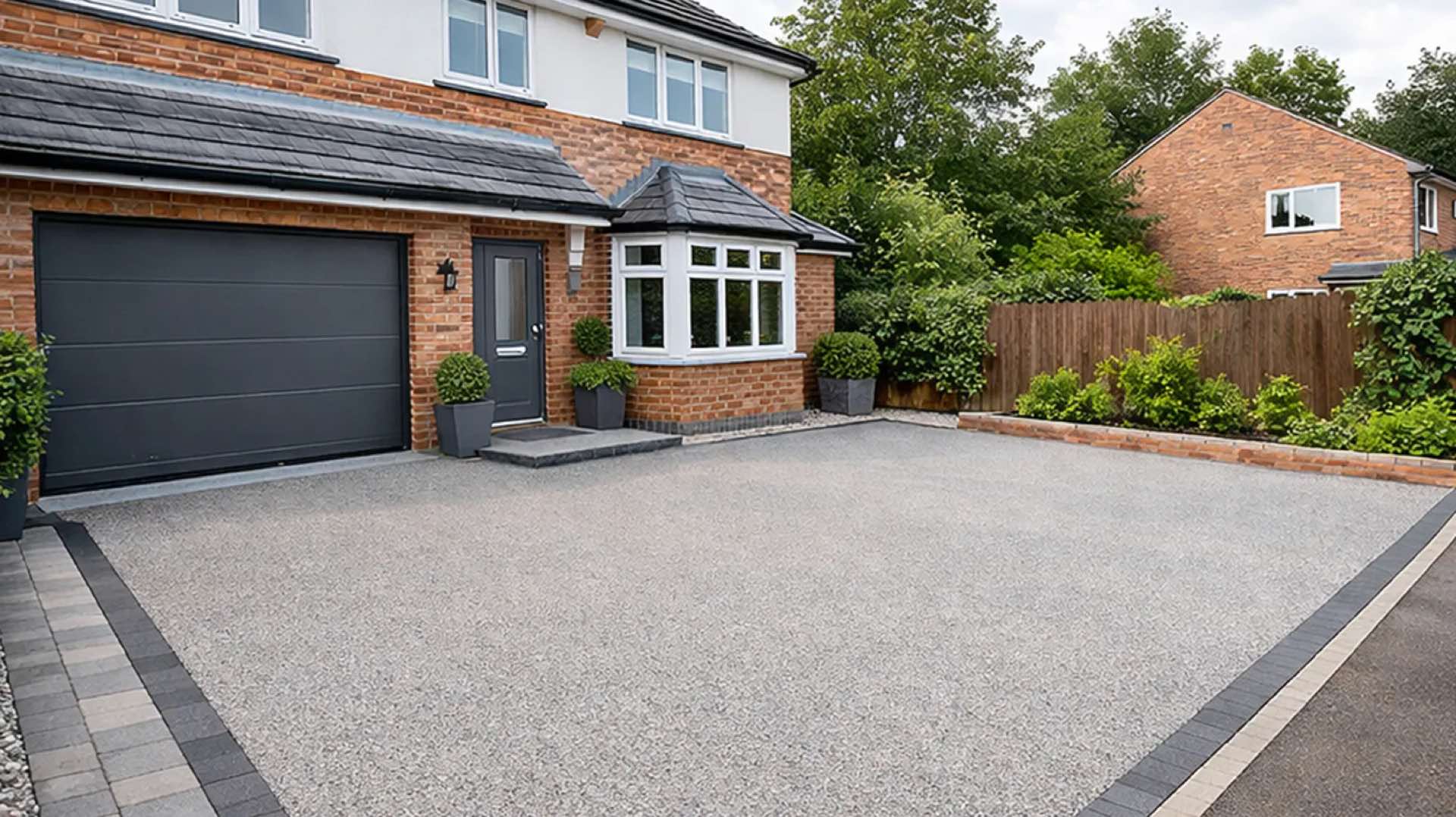
Ready to transform your driveway or patio?
Free quotes, a 5-year workmanship guarantee, and a team that turns up when they say they will.