- Rated 5.0 on Google
- 10 years’ experience
- 5-year workmanship guarantee
- Fully insured
- Free site visits
- No call-out charge
By Taylor Teasdale, Owner ·
This is the decision most people get stuck on, and there is a lot of confident nonsense written about it by firms that only lay one of them. We lay both, so here is the comparison without a thumb on the scale.
The first thing to say is that the choice matters less than people expect, because the surface is not where a driveway succeeds or fails. Both sit on the same sub-base, and that base is most of the cost and all of the risk. Choose either one laid properly over the other one laid badly, every time.
Appearance
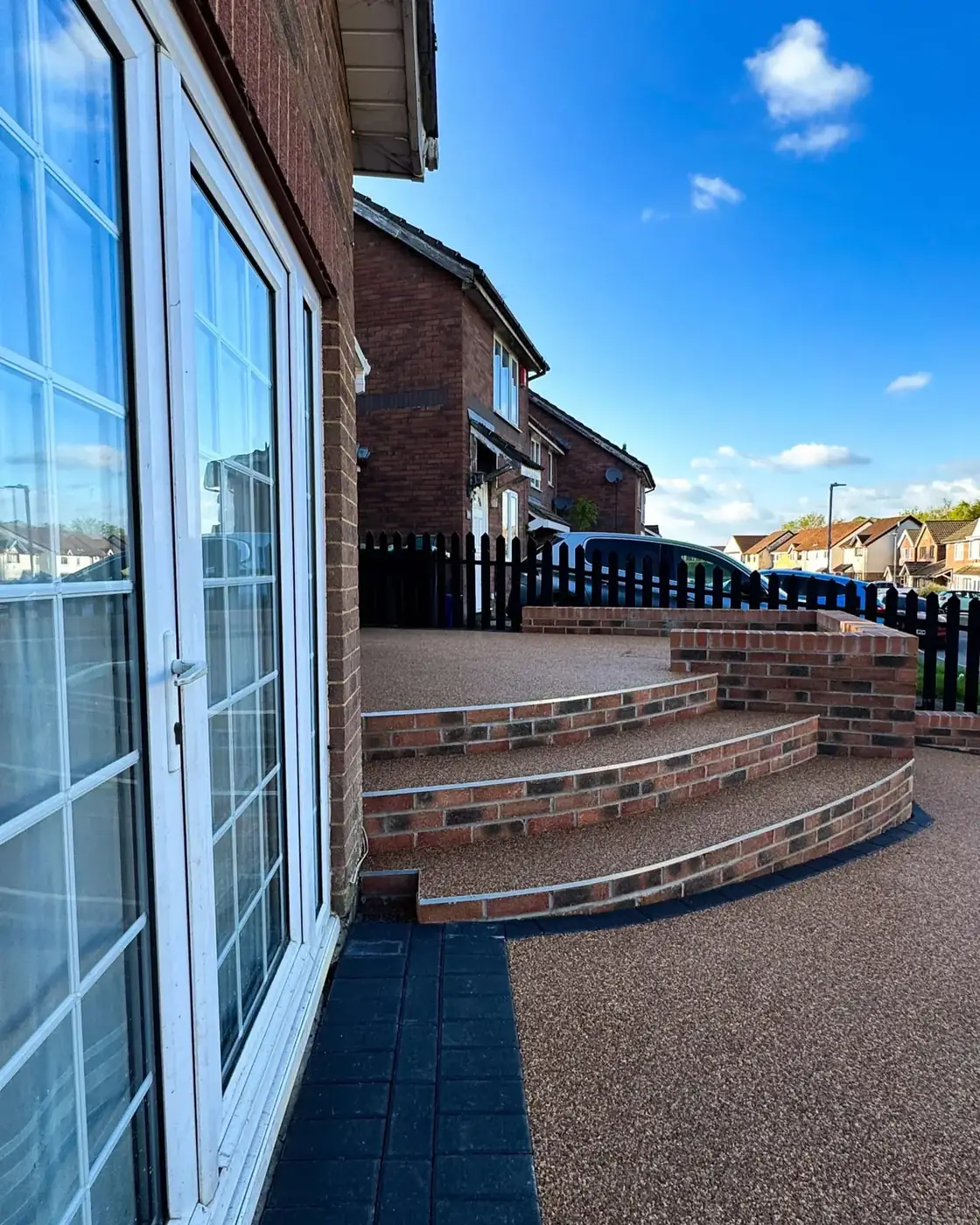
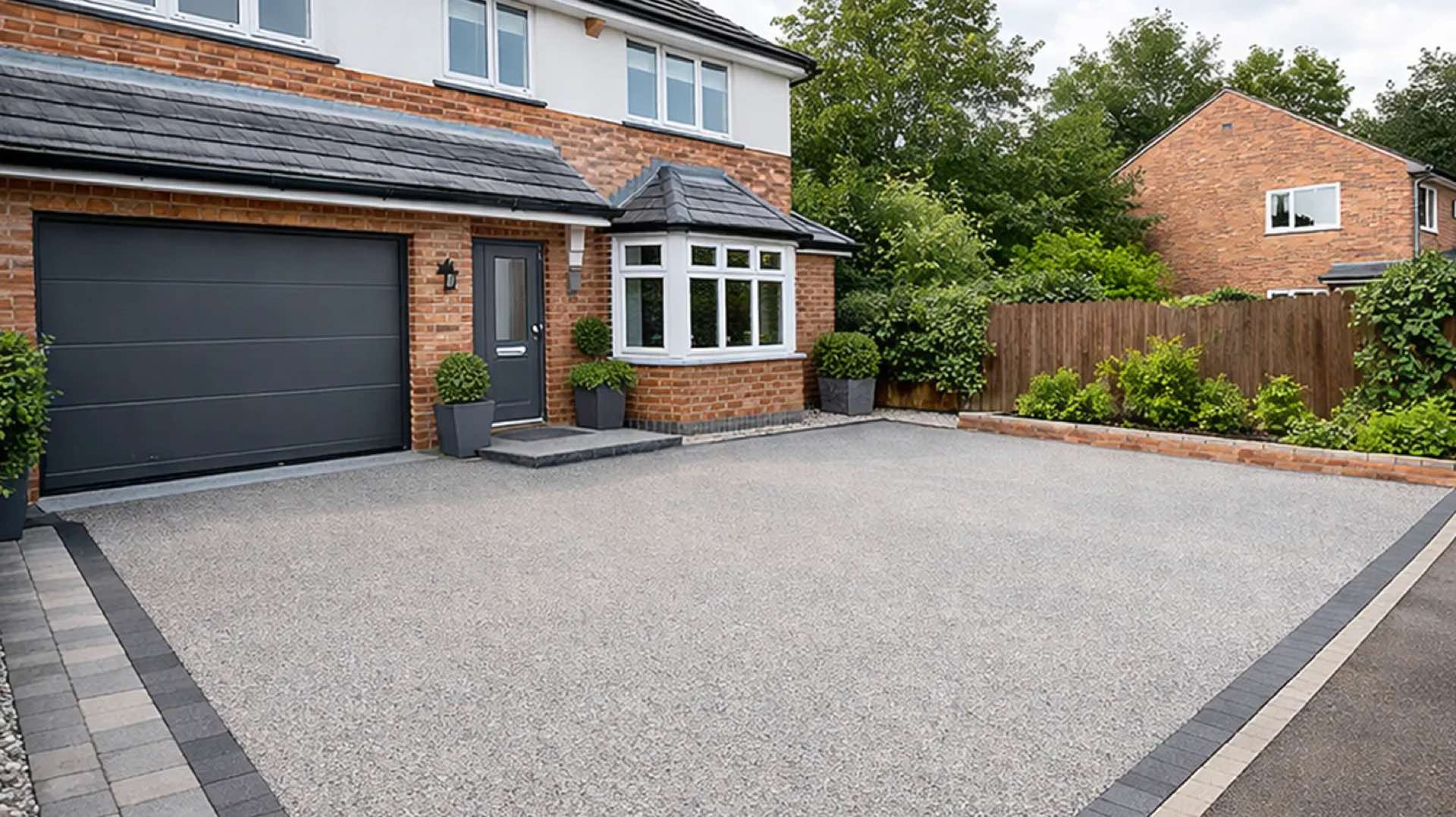
Resin-bound is seamless. It reads as one continuous surface with no joints, which looks modern and makes a small frontage feel larger. The colour comes from the aggregate, so you are choosing a blend rather than a pattern.
Block paving gives you pattern as well as colour — herringbone, stretcher bond, a contrasting border, a feature circle. On a period house, or anywhere you want the driveway to look traditional rather than contemporary, block paving usually sits better.
Weeds and maintenance
This is where resin has its clearest advantage. There are no joints, so there is nothing for a seed to root into. A brush and an occasional wash is genuinely all it needs.
Block paving has sand-filled joints, and over time those joints are where weeds and moss establish. It is manageable — re-sanding, or a polymeric jointing compound that sets firm, keeps it under control for years — but it is not nothing. If the thought of ever dealing with weeds puts you off, that points at resin.
Drainage
Resin-bound is permeable: water passes through the surface rather than running off it. That matters for two reasons. It keeps water off the road and out of your own threshold, and it means you do not need planning permission for a front driveway over five square metres, which an impermeable surface draining to the road does.
Block paving can absolutely be laid to drain — permeable blocks with open joints over a permeable sub-base do the same job — but it has to be specified that way. Standard blocks on a sealed base shed water like concrete does.
Repairs
Block paving wins this one outright. If a service has to be dug up, or a corner sinks, you lift the blocks, sort out whatever is underneath and relay the same blocks. Done well it is undetectable.
Resin is cut out and patched. A good patch blends well but rarely disappears entirely, particularly as the surrounding surface weathers. If you know there are services under the driveway, or you simply like the idea of being able to put it back, that is a real point for block paving.
Heavy use and turning
If the driveway takes a van, a caravan, a horsebox, or a lot of tight turning, block paving is the safer bet. The blocks interlock and spread load sideways, and a turning wheel is exactly the sort of stress the interlock was designed for. Resin handles normal car use without trouble, but repeated hard turning on a tight plot is where it is asked the most.
So which one?
If you want the lowest maintenance and the most modern look, and you are not planning to dig it up, resin. If you want traditional looks, easy repairs, or the driveway takes heavy or turning vehicles, block paving.
And if you are genuinely torn, say so at the site visit. We will look at the ground, the fall, what the house looks like and how you actually use the driveway, and give you an opinion. Neither of them pays us more.
Still not sure which one?
We lay both, so we have no reason to push you either way. Come to the free site visit with your questions and we will tell you which suits your driveway and why.
Common questions
Resin and block paving questions
Laid properly, both last decades. Resin-bound on a sound base typically gives 15 to 20 years before it wants attention; block paving can last 20 to 30 and individual blocks can be replaced as it ages. Neither fails because of the surface. Nearly every failure of either is the base underneath moving.
No, and it is the single most important distinction in this part of the trade. Resin-bound means every stone is coated in resin and trowelled out as one solid, permeable mat. Resin-bonded means resin is spread and loose stone is scattered on top. Bonded looks similar on day one, is not permeable, and sheds stone as it ages. If someone quotes you for resin, ask which one.
Yes, but it is a patch rather than a swap. A damaged area is cut out and re-laid, and a careful job blends well although it is rarely invisible. Block paving has the clear advantage here: you lift the affected blocks, fix what is underneath and put them back, and nobody can tell.
The aggregate is what you walk on, so it grips much like a tarmac road surface, and extra anti-slip can be added where it matters. Algae can grow on any surface in a wet, shaded spot, but because resin-bound is permeable, water does not sit on it, which helps. Use UV-stable resin: cheaper non-UV resins yellow within a couple of summers and there is no fixing it.
Ready to transform your driveway?
Free quotes, a 5-year workmanship guarantee, and a team that turns up when they say they will.